The Tuwhiri team
Programme Leadership

Carla Meledandri
Programme Manager
University of Otago
Carla Meledandri brings the perspective of both a researcher and a programme leader to Tuwhiri. A physical chemist and nanoscientist, she spent 13 years in the Department of Chemistry at the University of Otago, where she progressed to Associate Professor, and was an Investigator in the MacDiarmid Institute for Advanced Materials and Nanotechnology. Her research in functional nanomaterials fostered collaborations across academia and industry, supporting innovation and commercialisation. As Programme Manager, Carla is passionate about enabling collaborative, high-impact research that addresses complex scientific and societal challenges.
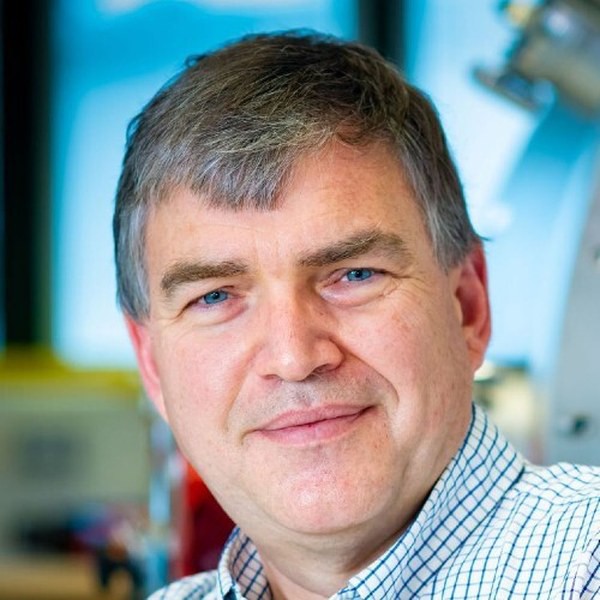
H. Randy Pollock
Lead, Space Systems Engineering
Paihau–Robinson Research Institute, Victoria University of Wellington

Harald G. L. Schwefel
Programme Leader / Principal Investigator
University of Otago
Harald Schwefel is a Professor in the Physics Department of the University of Otago and Science Lead of Tuwhiri. He is also the Deputy Director Science in Te Whai Ao – Dodd-Walls Centre for Photonic and Quantum Technologies and Principal Investigator in Quantum Technologies Aotearoa (QTA). His research interests are in the use of optical resonators. Such high-quality resonators are great to generate very high field intensities. With high fields the interaction of light with matter can show significant nonlinearities and light can interact with itself and new colours can be created. A side effect of these high-quality resonators is that they are extremely sensitive to changes in the environment making them an ideal candidate to measure such changes.


Mallika Suresh
Lead, Photonics
University of Otago
Mallika Suresh (Mika) is a Research Fellow at the Physics Department of the University of Otago and the Photonics Lead of Tuwhiri. For the last 5 years, her research has been focused on electro-optic nonlinear mixing of terahertz signals with optical modes in whispering gallery mode resonators. Before that, during her PhD, Mika worked with femtosecond pulses in gas-filled hollow-core fibres under the supervision of Prof. Philip Russell and Dr. Francesco Tani at the Max Planck Institute for the Science of Light. Soon after joining Harald’s team, she supervised the setting up of a femtosecond laser ablation system at the Physics Department for (among other applications) the fabrication of dielectric whispering gallery mode resonators for nonlinear optical experiments. She was the Agnes-Blackie Research Fellow of Te Whai Ao – Dodd-Walls Centre for Photonic and Quantum Technologies in 2024 – 2026 and now is an Associate Investigator in Te Whai Ao. Mika is also leading collaborations with international experts in the field of terahertz photonics such as Prof. Withawat Withayachumnankul at the University of Adelaide and Prof. Ileana-Cristina Benea-Chelmus at École Polytechnique Fédérale de Lausanne as part of the Tuwhiri programme.
Atmospheric Science

Photonics
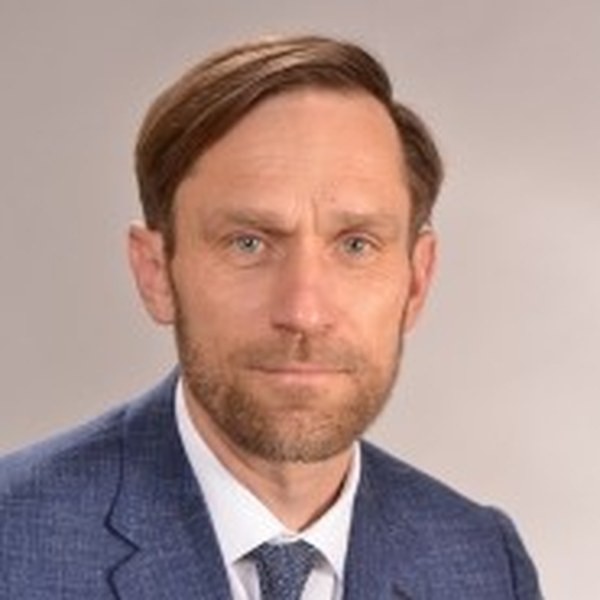
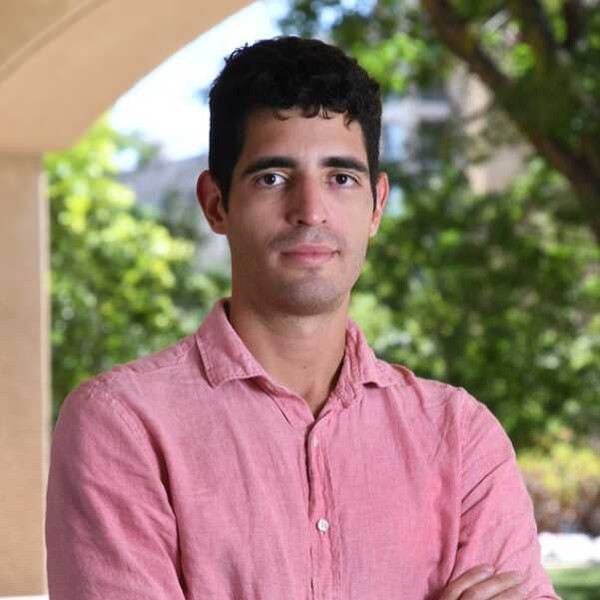
Harald G. L. Schwefel
Programme Leader / Principal Investigator
University of Otago
Harald Schwefel is a Professor in the Physics Department of the University of Otago and Science Lead of Tuwhiri. He is also the Deputy Director Science in Te Whai Ao – Dodd-Walls Centre for Photonic and Quantum Technologies and Principal Investigator in Quantum Technologies Aotearoa (QTA). His research interests are in the use of optical resonators. Such high-quality resonators are great to generate very high field intensities. With high fields the interaction of light with matter can show significant nonlinearities and light can interact with itself and new colours can be created. A side effect of these high-quality resonators is that they are extremely sensitive to changes in the environment making them an ideal candidate to measure such changes.
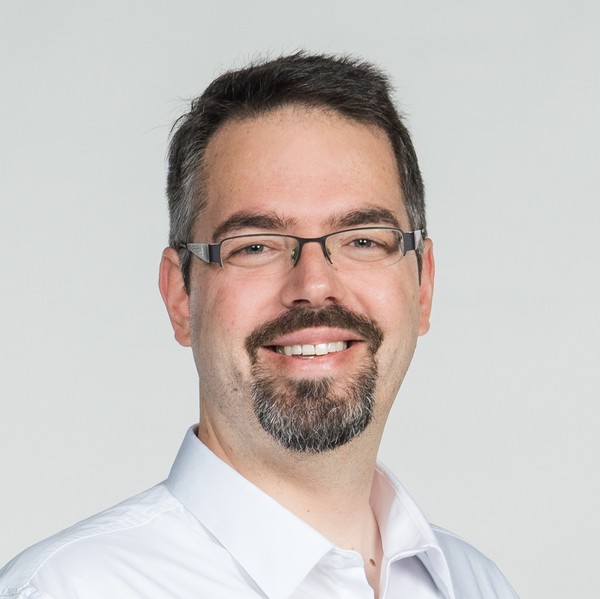
Florian Sedlmeir
Expert — Resonator Physics
University of Otago
Florian Sedlmeir is a Research Fellow and Marie Skłodowska-Curie Fellow at the University of Otago. His research focuses on high-Q whispering-gallery-mode resonators, nonlinear optics, and the conversion of microwave and terahertz signals to the optical domain. He completed his PhD at Friedrich-Alexander University Erlangen-Nürnberg, carrying out his research at the Max Planck Institute for the Science of Light, and subsequently worked in both academic research and industry before returning to the University of Otago in 2022. His current work explores electro-optic frequency conversion for low-noise millimetre-wave and terahertz detection, as well as microwave-to-optical interfaces for quantum technologies.
Mallika Suresh
Lead, Photonics
University of Otago
Mallika Suresh (Mika) is a Research Fellow at the Physics Department of the University of Otago and the Photonics Lead of Tuwhiri. For the last 5 years, her research has been focused on electro-optic nonlinear mixing of terahertz signals with optical modes in whispering gallery mode resonators. Before that, during her PhD, Mika worked with femtosecond pulses in gas-filled hollow-core fibres under the supervision of Prof. Philip Russell and Dr. Francesco Tani at the Max Planck Institute for the Science of Light. Soon after joining Harald’s team, she supervised the setting up of a femtosecond laser ablation system at the Physics Department for (among other applications) the fabrication of dielectric whispering gallery mode resonators for nonlinear optical experiments. She was the Agnes-Blackie Research Fellow of Te Whai Ao – Dodd-Walls Centre for Photonic and Quantum Technologies in 2024 – 2026 and now is an Associate Investigator in Te Whai Ao. Mika is also leading collaborations with international experts in the field of terahertz photonics such as Prof. Withawat Withayachumnankul at the University of Adelaide and Prof. Ileana-Cristina Benea-Chelmus at École Polytechnique Fédérale de Lausanne as part of the Tuwhiri programme.
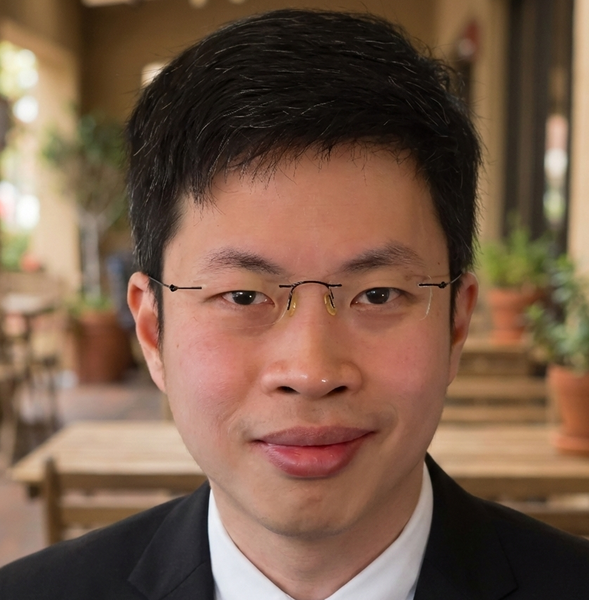
Withawat Withayachumnankul
Researcher — THz Antennas
University of Adelaide, Australia
Withawat Withayachumnankul is a Professor at Adelaide University and the Founding Leader of the Terahertz Engineering Laboratory. An ARC Future Fellow and a Fellow of both the IEEE and Optica, his research programs focus on terahertz integration, metasurfaces, antennas, communications, and radar systems. He currently leads a research group of approximately 15 PhD students and postdoctoral researchers and has maintained a long-standing collaboration as a Visiting Researcher at Osaka University since 2017. His scholarly work includes over 140 journal publications, and his contributions have been recognised with the IRMMW-THz Society Young Scientist Award (2020) and the National Measurement Institute Barry Inglis Medal (2024). Professor Withayachumnankul demonstrates extensive service to the engineering community, notably serving on the ARC College of Experts and as a Track Editor for the IEEE Transactions on Terahertz Science and Technology.
Space Systems Engineering
Max Goddard-Winchester
Researcher — Payload Systems
Victoria University of Wellington
Max Goddard-Winchester is a Research Engineer at the Robinson Research Institute, and a part of the Space Systems Engineers of Tuwhiri. With a background in mechanical engineering, he has led the mechanical design of several superconducting magnets systems and electric propulsion systems, including the design and flight qualification of the Hēki payload which successfully operated aboard the International Space Station. With this experience, his role is ensuring the structural performance of Tuwhiri's experimental payloads.
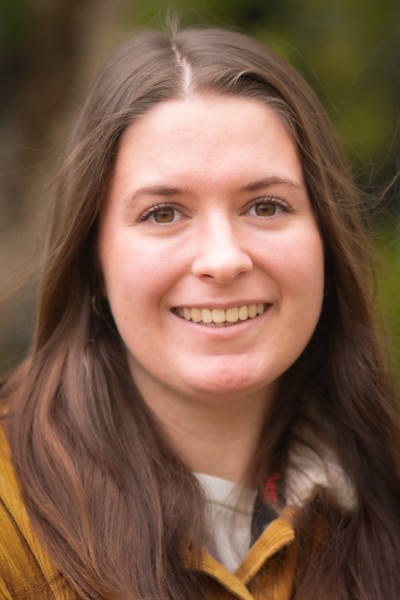
Celine Jane
Researcher — Payload Systems
Victoria University of Wellington
Celine is a Research Engineer in the space team at the Paihau—Robinson Research Institute. She has a Masters of Engineering from Victoria University of Wellington focusing on control system design for spacecraft using electromagnetic propulsion, as well as a Bachelor of Engineering (Hons) in Electronic and Computer System Engineering. Celine has previous industry experience in the NZ aerospace start-up scene, in addition to being award the NZ Space Scholarship in 2023 where she undertook an internship at NASA’s Jet Propulsion Lab in California. At the Robinson Research Institute, Celine spends her time developing spaceflight software and avionics, orbital and thermal models of spacecraft, and electromagnetic thruster instrumentation.

Betina Pavri
Researcher — Payload Systems
Paihau–Robinson Research Institute, Victoria University of Wellington
H. Randy Pollock
Lead, Space Systems Engineering
Paihau–Robinson Research Institute, Victoria University of Wellington

Daniel Price
Key Individual — Chief Scientist - Kea Aerospace
Kea Aerospace
Stratospheric science and earth observation delivery Chief Scientist - Kea Aerospace Remote Sensing/Glaciologist - University of Canterbury
Engagement & Outreach
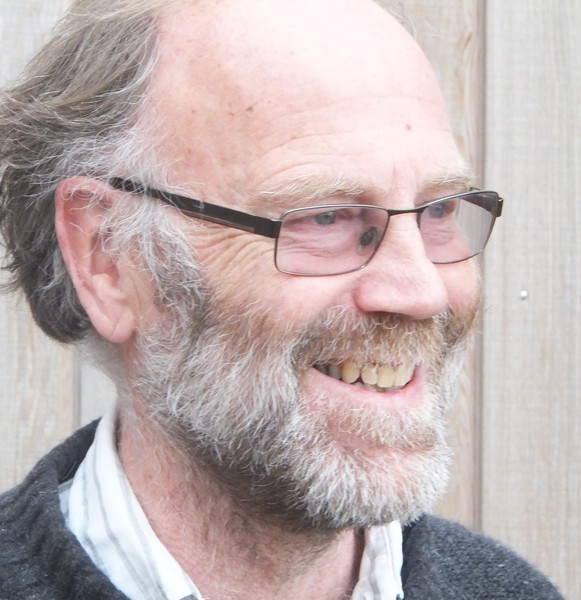
Simon Arnold
Project Support
Arnold & Woodhall Limited
Simon Arnold is a research strategy and innovation advisor with extensive experience in science, engineering, and technology commercialisation. As Managing Director of [https://arnold.co.nz](https://arnold.co.nz), he works with research organisations, funders, and industry partners on research strategy, roadmapping, and value creation. Simon has held leadership positions across New Zealand's research, energy, manufacturing, and business sectors, and has played a key role in shaping national energy research strategies. His work focuses on turning New Zealand's scientific and engineering capabilities into lasting economic and societal impact.
Jessa Barder
Lead, Engagement & Outreach
University of Otago
Leading the community engagement programme, Jessa brings seven years of science engagement experience across a wide variety of subject matter to the team. Currently based in the University of Otago’s Physics Department, she is also the Deputy Director – Community Engagement for Te Whai Ao – Dodd-Walls Centre and supports the department’s engagement activities. Despite the “children’s presenter” energy she often manifests, her particular area of research interest is the impact of relevant, appropriate, and interactive engagement activities on Kiwis over 65.
Patrick Fogarty
Industry — Manufacture & Deployment
Shamrock Industries
Atmospheric Advisory Board
Greg Bodeker
Advisor — Stratospheric Ozone
Bodeker Scientific
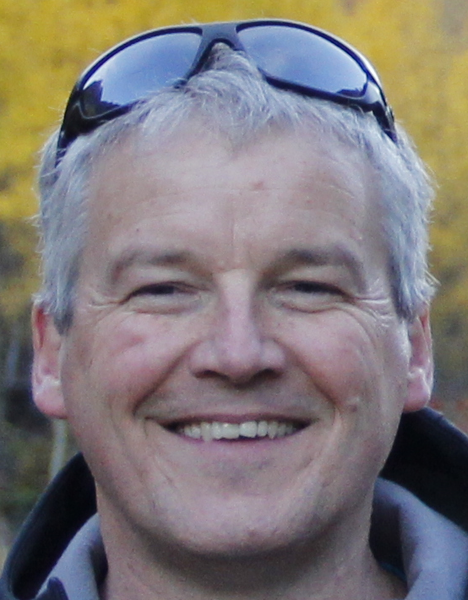
Greg Bodeker is the director of Bodeker Scientific Ltd, an independent research organisation that has been operating in New Zealand since October 2009. Bodeker Scientific conducts fundamental climate change research as well as research at the interfaces of climate and other disciplines (e.g. climate and finance, and climate and architecture). Greg has a PhD in Physics from the University of Natal in South Africa, and worked for the National Institute of Water and Atmospheric Research (NIWA) for a little over 15 years where he developed a strong programme of research in atmospheric chemistry and physics with a focus on Antarctic ozone depletion. Greg is also an adjunct professor at Victoria University. He has a passion for seeing innovation used to transition New Zealand's economy to a long-term sustainable model.
Nathaniel Livesey
Advisor — Aura MLS Principal Investigator
NASA Jet Propulsion Laboratory, California, USA

Photonics Advisory Board
Engineering Advisory Board
Tarik Errabih
Expert — Space Engineering
University of New South Wales, Canberra, Australia
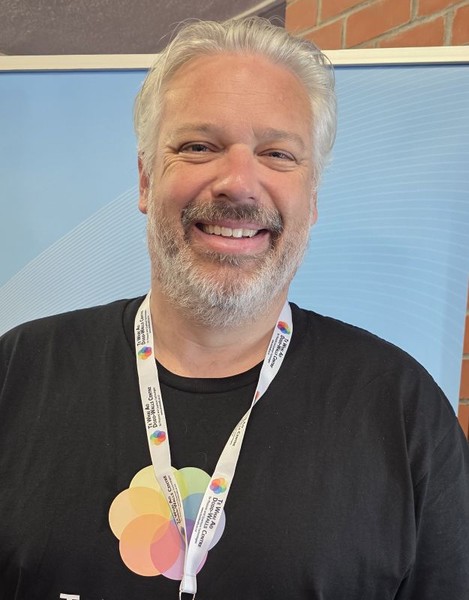
Nicholas Rattenbury
Key Individual — CubeSat Pathway
Te Pūnaha Ātea – Auckland Space Institute, University of Auckland