
Catalyst: Seeding award to build a partnership with NASA JPL
A two-year Catalyst: Seeding project pairs Tuwhiri's photonic sensor with a flight-proven JPL microwave spectrometer, aimed at measuring stratospheric water vapour.

Turning a laboratory instrument into a flight payload means solving the problems that surround the sensor: mass, power and volume budgets, vibration isolation, thermal control, pointing knowledge, and data handling.
A particular challenge is the collection antenna, which must be steerable while still directing radiation into the coupling waveguide. Our approach uses a cascaded pair of independently rotating prisms as a beam-steering mechanism.
The payload will be demonstrated on balloon flights from Lauder and Antarctica, and on a Kea Aerospace Kea Atmos Mk2 stratospheric aircraft.
Researcher — Payload Systems
Victoria University of Wellington
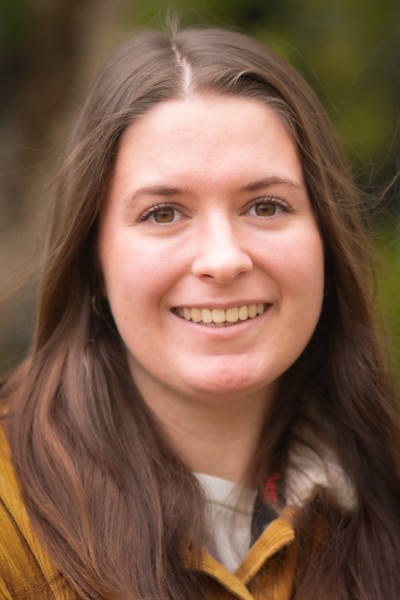
Max Goddard-Winchester is a Research Engineer at the Robinson Research Institute, and a part of the Space Systems Engineers of Tuwhiri. With a background in mechanical engineering, he has led the mechanical design of several superconducting magnets systems and electric propulsion systems, including the design and flight qualification of the Hēki payload which successfully operated aboard the International Space Station. With this experience, his role is ensuring the structural performance of Tuwhiri's experimental payloads.
Researcher — Payload Systems
Victoria University of Wellington
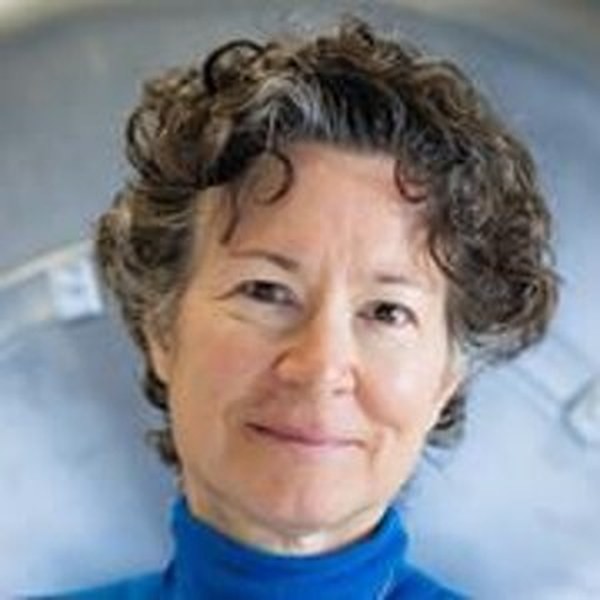
Celine is a Research Engineer in the space team at the Paihau—Robinson Research Institute. She has a Masters of Engineering from Victoria University of Wellington focusing on control system design for spacecraft using electromagnetic propulsion, as well as a Bachelor of Engineering (Hons) in Electronic and Computer System Engineering. Celine has previous industry experience in the NZ aerospace start-up scene, in addition to being award the NZ Space Scholarship in 2023 where she undertook an internship at NASA’s Jet Propulsion Lab in California. At the Robinson Research Institute, Celine spends her time developing spaceflight software and avionics, orbital and thermal models of spacecraft, and electromagnetic thruster instrumentation.
Researcher — Payload Systems
Paihau–Robinson Research Institute, Victoria University of Wellington
Lead, Space Systems Engineering
Paihau–Robinson Research Institute, Victoria University of Wellington
Key Individual — Chief Scientist - Kea Aerospace
Kea Aerospace
Stratospheric science and earth observation delivery Chief Scientist - Kea Aerospace Remote Sensing/Glaciologist - University of Canterbury
Expert — Space Engineering
University of New South Wales, Canberra, Australia
Key Individual — CubeSat Pathway
Te Pūnaha Ātea – Auckland Space Institute, University of Auckland
A two-year Catalyst: Seeding project pairs Tuwhiri's photonic sensor with a flight-proven JPL microwave spectrometer, aimed at measuring stratospheric water vapour.
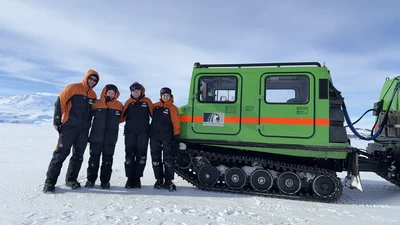
Harald Schwefel joined Professor Inga Smith's sea ice fieldwork in Antarctica, as much to understand how a polar campaign is organised as to help with the measurements.